The Physical Processes
 |
| Source: http://pi.b5z.net/i/u/1248569/i/vof4.jpg |
Valley of Fire - 1,000 years from present
The national park 1,000 years from now will look much the same as it does with the naked eye. Assuming the Las Vegas area continues to expand the park may find itself inundated with human presence. Humans typically alter the landscape by planting invasive species and building monoculture patches whether for food or aesthetics. This incursion will likley raise humidity and increase erosion. The large sandstone formations will continue to fracture and weather as it has for millions of years, though the process is slow and the overall landscape should retain the majority of its physical characteristics. Nearby lake Powell will most likely be drained leaving behind the beginnings of a salt flat basin.
 |
| Housing development in Las Vegas expanding outwards towards the hills. Humans have a dramatic impact on thier environment and cannot be ignored in understanding the fate of landforms when looking towards the future. With recklass disregard for future generations new settlements into the national park will strip the region of its natural resources and provide the platform from which great urban centers are built. Image Source: http://www.carriagetrade.org/local/cache-vignettes/L550xH368/_4Alex_MacLean___Las_Vegas__Nevada-d1333.jpg |
Valley of Fire - 10,000 years from present
As humanity has most likely completely overrun the area and begun excavation and mining projects which flatten the landscape only a few solitary lithified dunes remain. The humans have some recoded history that this area was once a valued national park with petroglyphs dating back to early humans but most of this knowledge has been lost. Some seismic activity has shifted the ground but for the most part not major changes are noticeable.
 |
| The human cities introduce water pools, irrigation, industrial rivers and farmland all of which contribute to the new more humid climate and proliferation of new invasive species. This picture illustrates increased plant growth and darker, more fertile soils. Source: http://astrosun2.astro.cornell.edu/~randerson/Arizona09/IMG_0984.jpg |
Valley of Fire - 1,000,000 years from present
The human population has by this time been extinguished and the landscape looks very different. After a millions years of weathering and erosion the sandstone edifices of the rocky mountain range have begun subsiding, dissolving into the Earth. This once arid landscape has entered a new tropical classification with the rising temperatures and humidity as the once frigid dry air masses from the north now descend with warm, wet air. The deposition from the ancient landscapes that came before now offer rich, fertile soil for a new tropical ecosystem to thrive with new and exciting forms of life. Rivers now running through the ancient national park carry away millions of years of depositional sediment from the cretaceous and down into the Pacific Ocean.
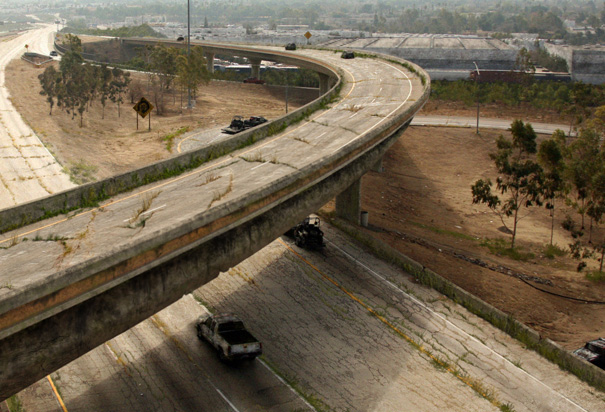 |
| Humans are no more but the vestiges of thier ancient civilization persist if only for a little while longer. Source: http://www.history.com/images/media/slideshow/life-after-people-season-one/life-after-people-los-angeles-highway.jpg |
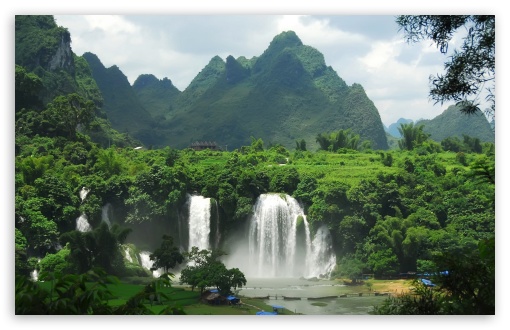 |
| New tropical land scape with ancient uplifted peaks now covered in plant life. Image source: http://hd.wallpaperswide.com/thumbs/waterfall_in_tropical_forest-t2.jpg |
