The landscape of the Valley of Fire is striking in contrast to the surrounding landscape. The national park is situated in the area of the Mojave dessert and the predominant vegetation offered is only shrubs and small cacti. The red hue of the park stands out against this bleak and monochromatic display. As described in previous entries, the morphology of the area suggests a sedimentary origin from an ancestral Lake Mead.
 |
| Lake Mead -- Source:http://www.ens-newswire.com/ens/feb2008/ |
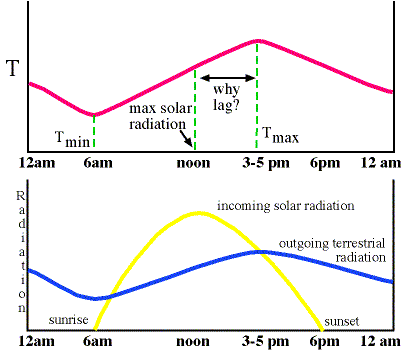
Situated in a rain shadow from the Sierra Nevada, Valley of Fire and the Mojave desert receive very little rain totaling only around 13in per year. During the winter in the national park the tempterature can dip to 20˚F and in some cases, in valley floors, as low as 0˚F. By contrast the summer days can reach temperatures as high as 130˚F. As demonstrated in the table above, the combination of solar new and the quantity of daylight throughout a 24 hour period will determine the temperature in some cases. In the case of the Valley of Fire the temperature change is exacerbated by continentality, which is the low latent heat capacity of land versus water.
 |
| Source: http://apollo.lsc.vsc.edu/classes/met130/notes/chapter3/daily_trend4.html |
The close proximity to the Sheep Range of mountains offers spledid views of a type of cloud known as altocumulus lenticularis. These breathtaking clouds form of the peak of clouds resulting from orographic lifting. Wind then sweeps them eastward away from their birthplace towards Lake Mead and the Valley of Fire.
 |
| Lenticularis -- Source: http://www.flickr.com/photos/photomason/2453450456/sizes/l/in/set-72157604806059249/ |

No comments:
Post a Comment